Finding the right wholesale fabric supplier is an important part of running a successful clothing business. Whether you own a boutique, manage a fashion brand or manufacture garments, good fabric quality and reliable supply can help you plan your collections more effectively.
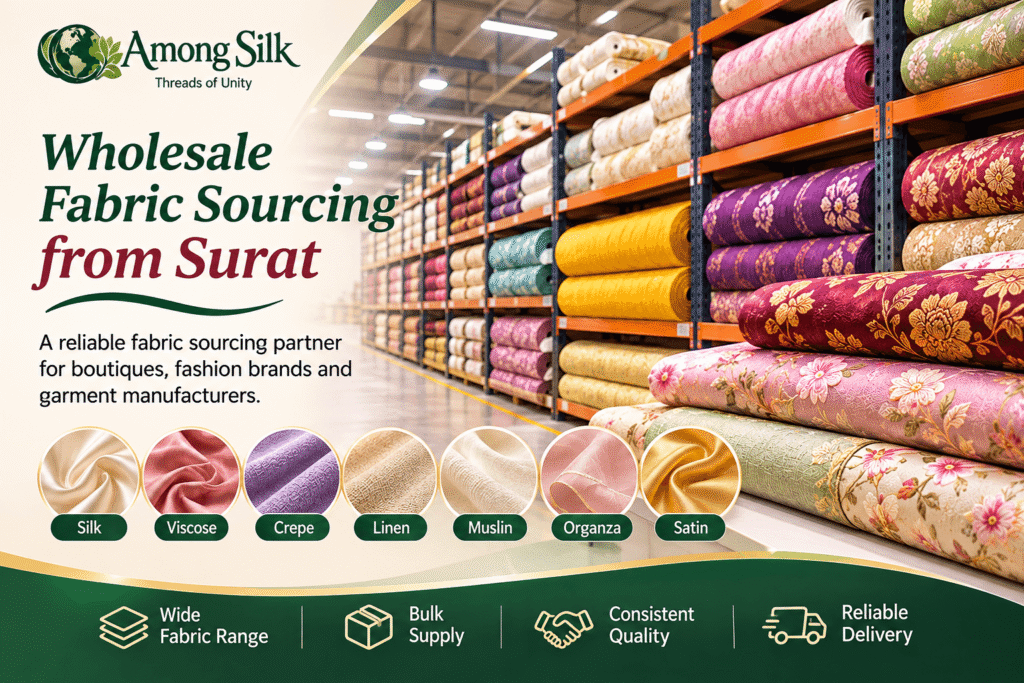
Surat is one of India’s well-known textile centres. Buyers can explore many types of fabrics, including silk, viscose, crepe, linen, muslin, organza and satin.
However, finding a reliable wholesale fabric supplier in Surat requires more than checking fabric prices. You should also consider material quality, fabric specifications, availability, order quantities and supplier communication.
In this guide, we will explain how to choose a suitable textile supplier for your business.
1. Understand Your Fabric Requirements
Before contacting a fabric supplier, you should know what type of fabric your business needs.
Different clothing products require different materials. For example, lightweight fabrics may be suitable for everyday clothing, while silk, satin and organza are often used for festive and occasion wear.
Start by identifying:
- The type of garments you want to manufacture
- Your preferred fabric composition
- Required fabric width and weight
- Plain, printed or embroidered fabric requirements
- Estimated purchasing quantity
- Your budget and delivery expectations
Clear requirements make it easier to compare suppliers and choose suitable materials.
2. Check the Supplier’s Fabric Collection
A good fabric supplier should offer materials that match your business requirements.
If your clothing brand produces different garment categories, you may need multiple fabric options.
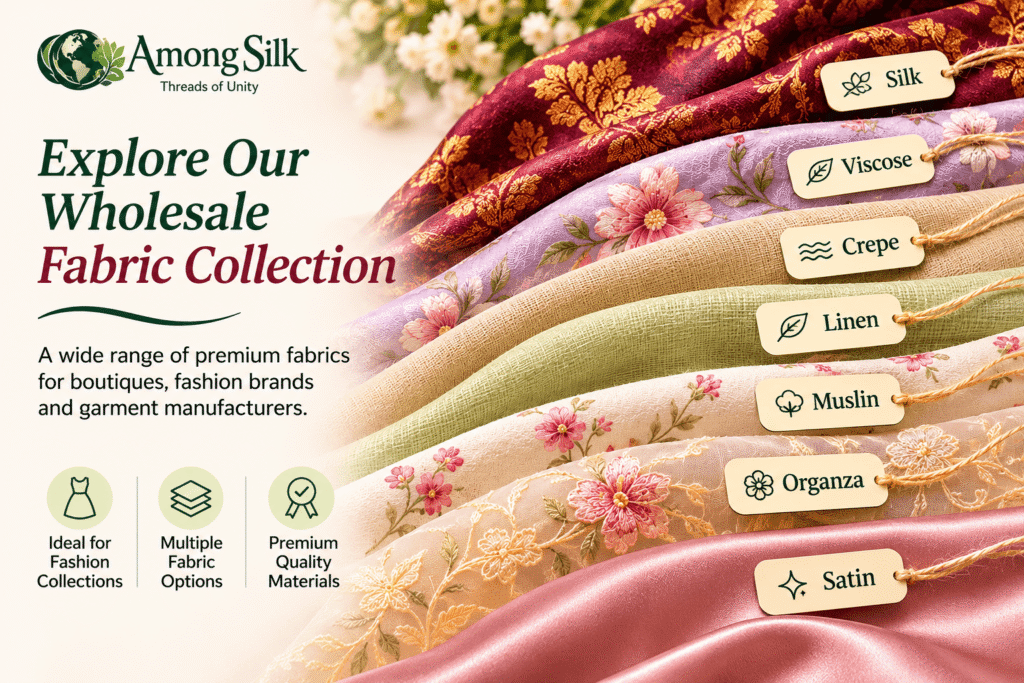
Common fabric choices include:
Silk Fabric
Silk is known for its smooth texture and elegant appearance. It is often used for sarees, festive clothing and designer garments.
Viscose Fabric
Viscose offers a soft feel and flowing drape. It is commonly used for kurtis, dresses and modern ethnic wear.
Crepe Fabric
Crepe is known for its textured surface. Different varieties are used for dresses, sarees and fashionable outfits.
Linen Fabric
Linen is valued for its natural texture and breathable qualities. It is suitable for many comfortable clothing styles.
Muslin Fabric
Muslin is a lightweight woven material that can be used for casual wear, kurtis and selected ethnic clothing.
Organza Fabric
Organza is a sheer and crisp material used for festive wear, sarees and decorative garment details.
Satin Fabric
Satin is known for its smooth surface and attractive shine. It is commonly used for occasion wear and dresses.
A silk and viscose fabric supplier may be useful for businesses developing both traditional and modern clothing collections.
3. Verify Fabric Quality Before Purchasing
Fabric quality should always be checked before placing a wholesale order.
Two fabrics may look similar in photographs but have different compositions, weights, finishes and performance.
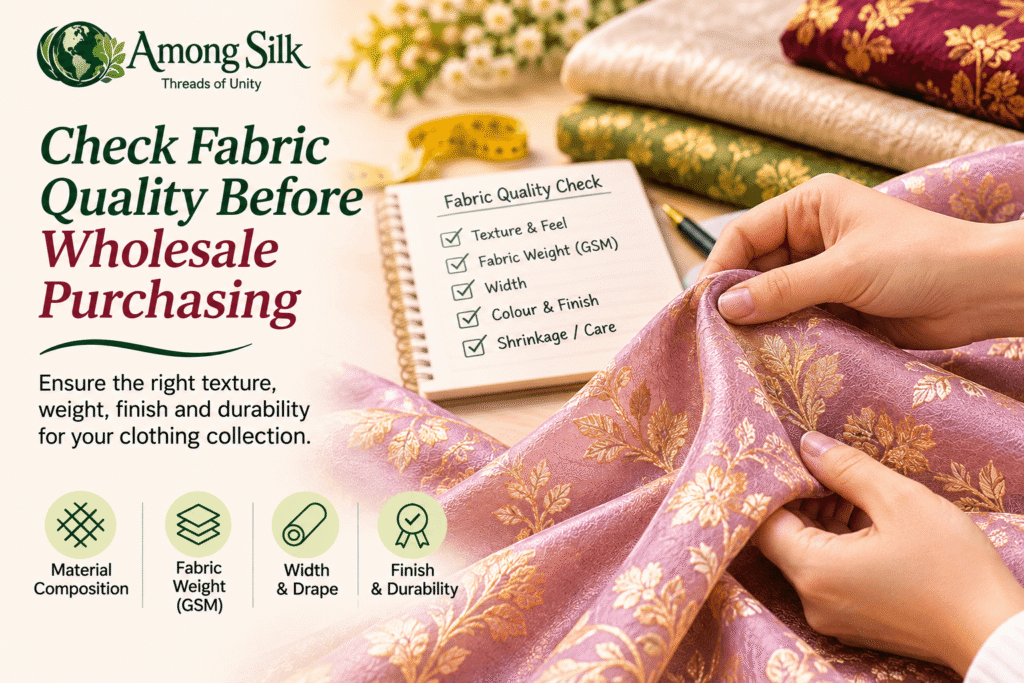
Before purchasing, check the following details:
Fabric Composition: Understand which fibres are used in the material.
Fabric Weight: Confirm the GSM or fabric weight based on your garment requirements.
Fabric Width: Check the available width to estimate fabric consumption.
Colour and Finish: Review the colour, surface texture and finishing quality.
Shrinkage and Care: Ask about washing instructions and expected shrinkage.
A premium fabric manufacturer in Surat should be able to discuss relevant material specifications and help buyers understand the available options.
Whenever possible, request samples before confirming larger quantities.
4. Compare Wholesale Fabric Prices
Pricing is an important consideration for garment manufacturers and clothing brands.
However, choosing the lowest-priced fabric may not always provide the best value.
Fabric prices can vary depending on fibre composition, construction, quality, finishing and purchasing quantity.
When comparing quotations from a wholesale fabric supplier in Surat, confirm:
- Price per metre or other selling unit
- Minimum order quantity
- Fabric width and composition
- Taxes and additional charges
- Packaging and transportation costs
- Payment terms
Comparing the total purchasing cost can help you manage your production budget more effectively.
5. Understand Minimum Order Quantity
Minimum Order Quantity, commonly known as MOQ, is the smallest quantity a supplier agrees to sell under particular purchasing conditions.
MOQ can vary according to fabric type, colour, availability and production requirements.
For example, a boutique may need smaller quantities for limited collections, while a garment manufacturer may require larger volumes for regular production.
A fabric supplier for boutiques in India should be able to explain the available purchasing quantities and commercial terms.
Always confirm the MOQ before finalising an order.
6. Check Fabric Availability and Delivery Planning
Fabric availability is important when developing clothing collections.
If your business works with seasonal launches or repeat garment designs, delayed fabric supply may affect production schedules.
Before ordering, ask the supplier about stock availability, expected dispatch timelines and whether the same fabric can be sourced again.
It is also helpful to confirm how the supplier communicates order updates.
A reliable sourcing process can make garment production planning easier.
7. Evaluate Supplier Communication
Good communication is an important part of wholesale fabric purchasing.
A supplier should be able to answer questions about fabric specifications, available colours, purchasing quantities and pricing.
Before choosing a fabric manufacturer in Surat, discuss your requirements clearly and evaluate the information provided.
You can ask questions such as:
- Which fabric varieties are available?
- Can I request a fabric sample?
- What is the minimum order quantity?
- Are different colours or finishes available?
- What are the payment and delivery conditions?
- Can I enquire about future orders?
Clear communication can reduce misunderstandings during the purchasing process.
8. Ask for Fabric Samples
Fabric samples allow buyers to examine materials more closely before making a larger purchase.
A sample can help you understand the fabric’s feel, texture, drape, colour and thickness.
For clothing brands, it may also be useful to stitch a sample garment and evaluate how the material behaves during cutting, sewing and finishing.
Businesses looking for a fabric manufacturer for clothing brands should consider sampling an important part of fabric selection.
Testing the material before bulk purchasing can help reduce avoidable sourcing mistakes.
9. Choose Fabrics According to Your Customers
Every clothing business has a different target audience.
A boutique selling festive outfits may prefer silk, organza or satin, while a brand focused on everyday clothing may explore linen, muslin, viscose or suitable blends.
A fabric supplier for boutiques in India can be considered when sourcing materials for different garment styles and customer preferences.
Before choosing fabric, think about the comfort, appearance, care requirements and price expectations of your customers.
Selecting the right material helps you create clothing collections that suit your market.
10. Check the Supplier’s Business Details
Before making a large wholesale purchase, take time to verify the supplier’s business information.
Check the business name, address, contact details and applicable registration information.
You can also ask for a written quotation containing the agreed fabric specifications, quantity, price and payment terms.
If possible, visit the supplier or request additional product information.
It is important to understand whether the business manufactures fabrics directly, sources them through manufacturing partners or operates as a trader.
These checks can help buyers make more informed purchasing decisions.
11. Build a Long-Term Fabric Sourcing Relationship
Finding a suitable supplier can be useful beyond a single order.
Boutiques and clothing brands often need fabrics for new designs, seasonal collections and repeat production.
A fabric manufacturer for clothing brands should understand the importance of clear specifications, communication and purchasing requirements.
Working with a consistent sourcing partner may make it easier to discuss future collections and explore additional materials.
However, product quality, availability and commercial terms should still be checked for every order.
12. Why Consider Among Silk for Fabric Sourcing?
Among Silk is a Surat-based textile business offering fabric options for boutiques, fashion designers, garment manufacturers and clothing brands.
Our fabric categories include silk, viscose, crepe, linen, muslin, organza, satin and other materials for different clothing applications.
Businesses searching for a premium fabric manufacturer in Surat can explore our fabric categories and contact our team to discuss available materials.
As a silk and viscose fabric supplier, Among Silk welcomes enquiries related to fabric specifications, colours, availability, pricing and purchasing requirements.
Whether you are developing a new collection or sourcing materials for an existing business, our team can discuss fabric options suitable for your needs.
Conclusion
Choosing a reliable wholesale fabric supplier in Surat requires careful consideration of fabric quality, specifications, pricing, availability and supplier communication.
Whether you own a boutique, manage a fashion brand or manufacture garments, selecting suitable materials can help you plan your clothing collections more effectively.
Among Silk offers fabric options for traditional and modern clothing applications.
Explore our fabric collection and contact our team to discuss fabric availability, specifications and wholesale purchasing requirements.